



Seasonal activities often highlight kindness without helping students understand it. While Valentine crafts can be cheerful, empathy develops through repeated practice, reflection, and intentional instruction. Students learn to recognize emotions, consider perspectives, and respond thoughtfully when those skills are woven into everyday learning rather than tied to a single celebration.
Empathy does not emerge automatically. It requires structure, guidance, and opportunities to apply thinking in meaningful ways. Instructors who move beyond one-day projects and integrate empathy into daily routines often find students treating it as a practical skill rather than a symbolic gesture.
Why Teaching Empathy Matters in Everyday Instruction
Empathy supports both academic learning and social development. At its core, it is the ability to recognize another person’s thoughts and feelings and respond with understanding and care. Collaboration improves, group work becomes more productive, and conflict resolution becomes more thoughtful when students understand how others think and feel. Emotional regulation also strengthens as students begin to anticipate how their choices affect others.
Research supports this connection. Studies show that structured role-play paired with guided discussion leads to measurable growth in empathy and social perspective-taking when experiences are repeated and reflected upon over time rather than treated as isolated events.
This distinction matters. Kind actions without an understanding of others’ perspectives tend to remain surface-level. Empathy develops through repeated practice, observing, interpreting, and responding with intention. When instructors revisit empathy across different contexts throughout the year, students build skills that extend beyond individual lessons.
The activities below are designed for students in homeschool and traditional classroom settings and support age-appropriate practice with empathy, kindness, and social awareness beyond a single lesson or holiday.
Craft-Based Activities That Support Perspective-Taking
Hands-on projects give students a way to represent internal thinking externally. When learners create something that reflects another person’s experience, they tend to slow down and consider viewpoints beyond their own.
These activities prioritize reflection and discussion rather than precision or aesthetics. Instructors can adapt materials and activities to what they have available and to the age and abilities of their students.
Walk in Their Shoes Craft
Students decorate paper shoes to represent the feelings or circumstances of another person. The focus may be a story character, a historical figure, or a peer navigating a challenge.
Guiding questions support discussion, such as:
- What might this person be thinking right now?
- What emotions could they be feeling?
- What kind of support might help?
Younger students can share responses verbally. Older students can write short explanations. The emphasis stays on reasoning and perspective.
Emotion Portrait Collage
Students create portraits using images that convey different emotional states. Instead of labeling emotions alone, instructors prompt students to consider what led to the feeling. Students may use magazine images, printed photos, or their own drawings to represent emotions, depending on student readiness and the materials available.
This activity supports emotional inference, which strengthens both social awareness and reading comprehension. It encourages students to move beyond naming emotions and consider the experiences that may have caused them.
Kindness Chain Reaction
Students write brief descriptions of kind actions on paper strips, which are then linked together to form a growing chain. Each paper link records an act of kindness that was given or received. Over time, the growing chain reinforces the idea that compassion develops through consistent action and follow-through.
This activity pairs well with reflection journals or group conversations about effort and consistency.
Empathy Map Posters
Students complete posters or graphic organizers that capture what a person might see, think, feel, and need. This structure works across grade levels and subject areas.
Empathy mapping helps students organize observations about another person’s experience and identify needs that may not be immediately visible. It aligns naturally with literature studies and supports deeper discussions about gratitude and awareness. Instructors who want to extend this thinking may find it useful to connect these conversations to broader reflections on gratitude and appreciation.
Collaborative “We All Belong” Mural
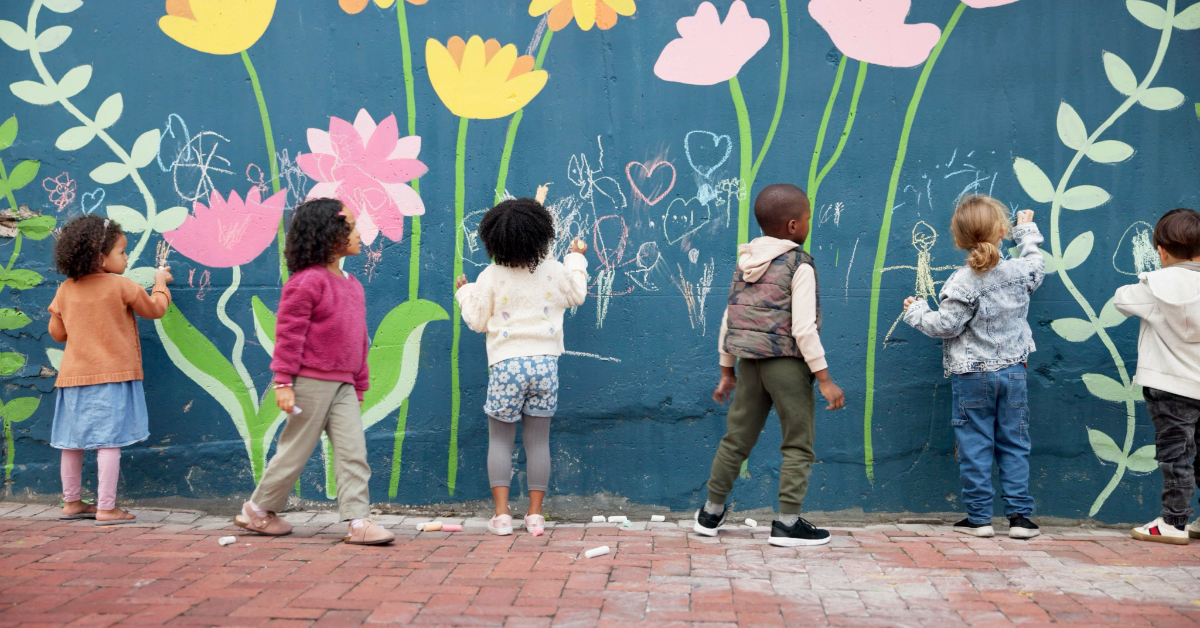
Each student contributes one piece to a shared mural. The final image depends on every contribution. The mural ultimately becomes a visual anchor that reinforces community and inclusion.
Students may contribute drawings, words, or symbols that represent identity, belonging, or community, which are assembled into a single shared display.
Research has found that collaborative art experiences support empathy and compassion by encouraging shared meaning-making and reflection.
Role-Play and Scenario-Based Practice
Pretend play supports empathy when it is structured and intentional. Recent studies note that guided social pretend play supports prosocial behavior and positive peer relationships, showing that reflection before and after the activity plays a critical role in outcomes.
What Would You Do Skit Box
Scenario cards describe realistic situations such as exclusion, misunderstandings, or public mistakes. Students act out responses, then pause to discuss outcomes.
Discussion questions may include:
- Which responses helped the situation?
- Which responses created tension?
- What could change next time?
This structure helps students connect choices with consequences.
Emotion Freeze Game
Students freeze in poses that represent different emotions. Others identify the emotion and suggest supportive responses. Guide the conversation to help students define the emotion and ask them how they identified the emotion being portrayed. This activity reinforces cause-and-effect thinking while building emotional vocabulary.
Circle of Voices
Students speak from another perspective. This may be a fictional character, a historical figure, or a hypothetical peer. The activity supports listening skills and encourages thoughtful response, rather than immediate reaction.
Daily Kindness Routines That Build Consistency
Empathy grows through repetition, not one-time projects. Small, predictable routines support long-term development.
Instructors may consider routines such as:
- Morning empathy check-ins
- Rotating kindness responsibilities
- Reflection journals or short written prompts
- Partner encouragement notes
These practices align with mastery-based learning by revisiting skills in varied contexts. Over time, compassion becomes part of the classroom or home environment rather than a scheduled activity.
Integrating Empathy Across Academic Subjects
Empathy fits naturally into academic instruction.
- Literature: Students analyze character motivation and perspective.
- History: They examine events through multiple viewpoints.
- Science: Students discuss how decisions affect communities and environments.
- Art: They express emotion visually and interpret the work of others.
These cross-subject connections reinforce that social understanding supports academic thinking rather than competing with it. They also open the door to deeper conversations about how students relate to their communities and navigate personal boundaries.
Discussions around civic participation, adverse experiences, and respectful communication can complement empathy work when introduced thoughtfully over time.
Practicing Empathy Beyond Seasonal Projects
Empathy builds when students repeatedly practice noticing others, reflecting on experiences, and responding with care throughout the year. Collaborative art, guided role play, and consistent kindness routines help make those practices visible and sustainable.
This work shapes classroom culture and family learning environments over time. When practice continues beyond a single holiday, understanding has room to grow.
To support continued practice, try the Demme Learning Friendship Festival Passport Activity. This activity provides a structured way for students to apply empathy, connection, and community-building across multiple experiences. Download here!


Leave a Reply