



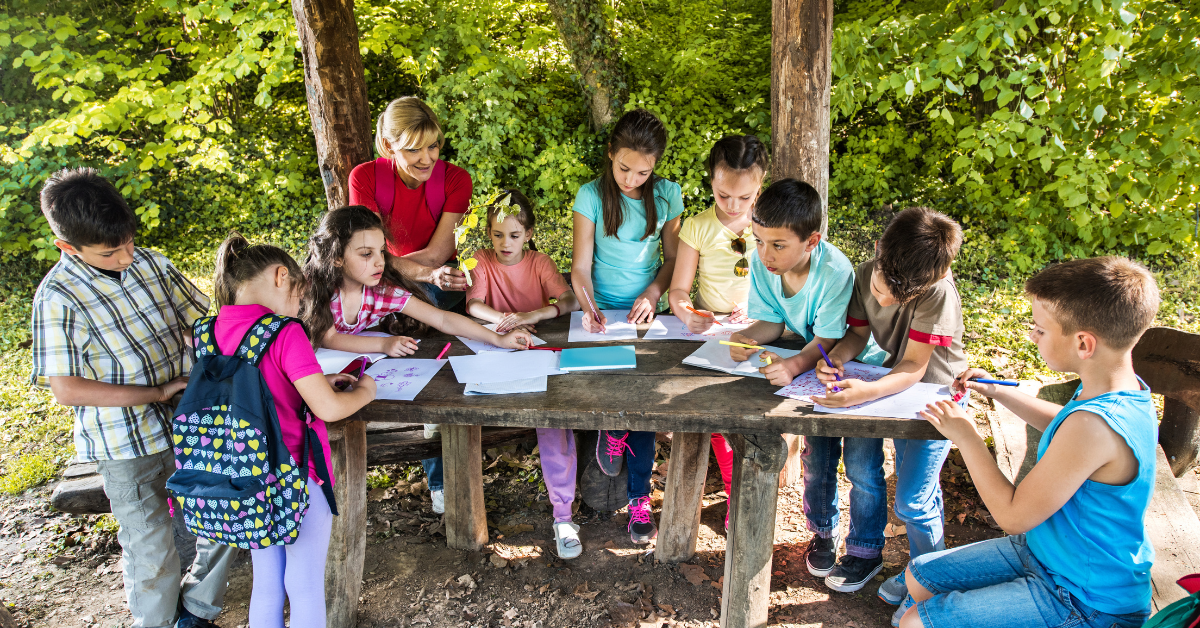
By the time the school year starts to wrap up, most students are already daydreaming about their summer plans.
In the meantime, final assignments pile up, papers come home in stacks, and the routine that held the year together begins to loosen before anyone has fully stopped to notice how much learning, effort, and growth the academic year actually contained.
Progress should never go unnoticed, and taking a moment to point it out is well worth the pause.
Turning this moment into an end-of-the-year tradition gives students a chance to reflect on where they began, what challenged them, and how they changed along the way. Whether you teach in a classroom or at home, small end-of-year rituals can help students celebrate achievements, strengthen confidence, and close the year on a high note.
Why End-of-Year Traditions Matter for Students
Students do not always notice growth as it happens.
Some progress is easy to measure. A student may read more fluently, write more clearly, or solve harder problems than they could in the fall. Other growth is quieter but just as important, whether it’s showing greater persistence, asking better questions, or taking more ownership of daily work.
End-of-year traditions help make that growth visible. They also give students a sense of closure. Instead of ending the year in a blur, students have a chance to reflect on what they learned, what challenged them, and what they want to carry forward.
A short gratitude prompt can deepen that reflection. Ask students to name one person who helped them this year and one moment they want to remember.
Reflection Activities to Help Students See Growth
A recent meta-analysis published in ScienceDirect found that reflective interventions have a profound effect on academic achievement. Reviewing successes helps students look across the full year and notice what changed. Without reflection, many will only remember the difficult moments.
A few effective student reflection activities work well in both homeschool and classroom settings:
- Complete a short “My Year in Review” page with prompts about effort, progress, and proud moments
- Compare an early work sample with a more recent one and identify what has improved
- Write a note to a future self about one goal for next year
- Revisit goals from the start of the year and reflect on what helped, what changed, and what still needs work
These prompts can help students think more specifically about their learning:
- What was the hardest thing you worked through this year?
- What are you most proud of?
- What is something new you discovered about yourself?
- What would you like next year’s self to remember?
For younger students, reflection may take the form of drawing, dictation, or selecting photos. Older students may prefer a short, written response or a digital slide.
For more ideas on year-end reflection, read our related article, Looking Back at Your School Accomplishments This Year.
Creative End-of-Year Traditions for the Classroom
The best end-of-year classroom traditions are simple enough to repeat and personal enough to matter.
A few strong options include:
- A memory wall filled with favorite moments, class victories, and kind acts
- Strength-based awards that name real qualities such as persistence, creativity, or thoughtful participation
- A storytelling circle where students share one moment that they want to carry into summer
- A class time capsule with notes, drawings, photos, and predictions for the year ahead
A class timeline can work especially well. Add reading milestones, writing pieces, science projects, art, and photos from special days. For students who can see the year laid out in front of them, growth often feels more concrete.
Meaningful End-of-Year Traditions for Homeschool Families
Homeschool end-of-year celebration ideas often work best when they feel personal and low-pressure. A family does not need a formal ceremony to make the end of the year memorable.
Homeschool year wrap-up activities might include:
- A family reflection dinner where each child shares a challenge, a proud moment, and a favorite memory
- A scrapbook page with photos, book lists, field trips, and captions in the student’s own words
- Returning to a favorite project so the student can explain it again with a fresh perspective
- A capstone field trip connected to something studied during the year
A student-led share time can also work well. Ask each child to teach back one idea, demonstrate one skill, or show one piece of work that captures meaningful growth.
For more homeschool-specific encouragement, read our related blog post, How to Finish Your Homeschool Year with a Flourish.
Creating a Time Capsule of the School Year
A time capsule gives reflection a physical form. Instead of talking generally about what happened during the year, students collect a few concrete pieces of it.
The contents can stay simple:
- A favorite book or subject
- One challenge that required real effort
- A drawing, photo, or self-portrait
- One prediction for the coming year
In a classroom, the capsule might be a folder, envelope, or paper bag. In a homeschool setting, it could be a keepsake box, binder pocket, or jar. When students open it at the end of the following year, they can see the change for themselves.
Keeping the Focus on Growth, Not Just Achievement
A strong ending to the school year should honor more than grades.
Celebrating student growth means paying attention to perseverance, curiosity, creativity, stronger habits, and a greater willingness to keep trying. Finished work is important, of course, but it is only part of the story.
When adults identify effort and display improvement alongside results, students are more likely to connect progress with practice and persistence. End-of-year traditions can reinforce the idea that growth is not always dramatic. Sometimes it shows up in smaller ways, including better questions, steadier routines, and more confidence after difficulty.
Reflective questions can support that mindset:
- Where did you keep going even when something felt hard?
- What improved because you practiced?
- What do you understand now that once felt confusing?
Carrying the Momentum into the Next School Year
To end the year on an encouraging note, it’s important to look forward.
Ask students to name one strategy that helped improve their learning this year. Then ask them to set one small goal for the future. These goals should be specific and realistic, such as reading directions twice, showing work more clearly, asking for help sooner, or keeping materials organized in one place.
This kind of next-step thinking helps students see learning as an ongoing process and gives them a stronger start for the next school year.
End the Year with Something Students Can Keep
The final days of school move quickly, which is why simple traditions matter.
A reflection page, a scrapbook entry, a memory wall, or a time capsule gives students a way to hold the year in their hands for a moment before it slips into summer. These small rituals help students notice what changed, what mattered most, and what they want to carry forward.
For classroom instructors and homeschool families alike, meaningful end-of-year traditions offer a practical way to celebrate student growth and close the year well.
Visit Demme Learning’s online resources for the My Year in Review Time Capsule Worksheet and use it to help students gather memories, mark growth, and set one hope for what comes next!
Leave a Reply